REPO: archi-netizen/ai-korp-neural-archives
Applied Research · AWS Infrastructure · AEC + Branding
AI-KORP NEURAL ASSET ARCHIVES & TOOL INTELLIGENCE FRAMEWORK
An independent research framework investigating automated design taxonomies using cloud-native AI. Transitioning static architectural archives into active knowledge bases — while maintaining data sovereignty and staying aligned with the EU AI Act's literacy and disclosure logic.
Brand Visuals & Generative Design
Tools for brand identity creation, generative imagery, typographic systems, and visual asset production. Applied to logo design, campaign visuals, and AI-assisted mockups.
Environmental Analysis & Exploration
Tools for architectural rendering, spatial simulation, environment generation, and material visualization. Bridging physical space and digital intelligence.
Cultural Research & Knowledge Synthesis
LLMs, research assistants, and knowledge tools for cultural analysis, theoretical writing, brand strategy research, and citation management.
Workflow Automation & Documentation
Tools for project management, automated documentation, client reporting, and operational efficiency within AEC and brand design practices.
Neural Asset Archives · AWS Architecture
From Passive Storage
to Active Intelligence.
A serverless cloud pipeline designed to transition static archives into active intellectual resources. Only the Rekognition stage has actually been run against real assets so far, tested manually through the AWS console — the rest is documented as proposed architecture, not yet built.
Processing Flow
Tool Index — 40 Audited
Proof of Concept · "Industrial Workshop" Test Content
Machine Perception, Tested.
The pipeline was tested against a fictitious "Industrial Workshop" case — built and labelled explicitly as test content, not a real commission — using three distinct image assets, classified individually through the Amazon Rekognition console.
| Asset | What Rekognition Returned | Basket |
|---|---|---|
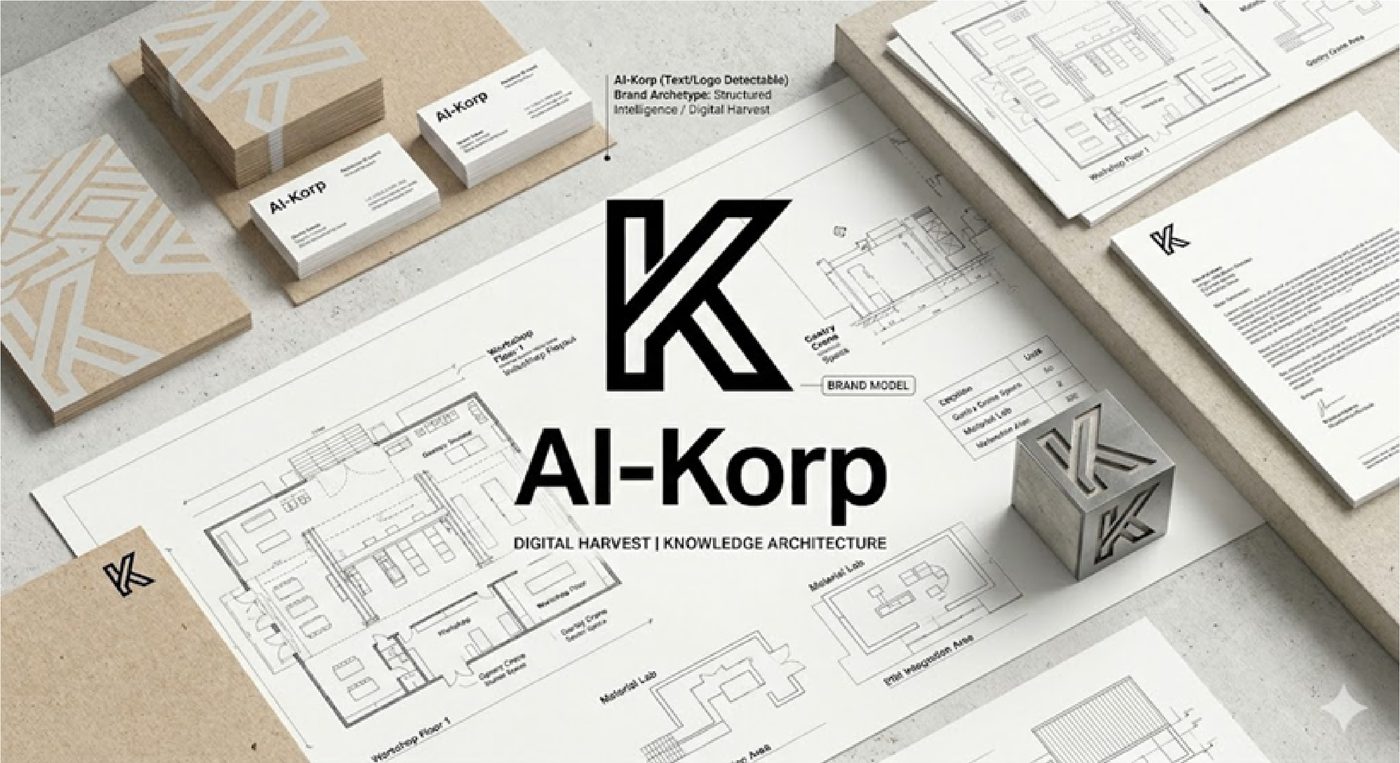
| Brand context | Diagram, Business Card, Text, Chart — high-confidence labels for graphic and typographic content. | INTELLECTUAL |
| Spatial context | 99.8% Architecture and Building, alongside 64.9% Manufacturing on the same image — distinguishing architectural from industrial-use categories. | SPATIAL |
| Material context | Corrosion, Rust — labels for surface condition on a rusted steel panel detail. | CREATIVE |
Rekognition · Top Confidence Labels · Spatial-Context Asset
What a classifier like this reads is rarely structural type in the abstract — it's colour, material, and signage density, much of which is brand-driven rather than purely programmatic. Section 5b extends this question from a single building to a city.


Extending to Urban Scale · Preprint, 2026
The Decorated Shed, at City Scale.
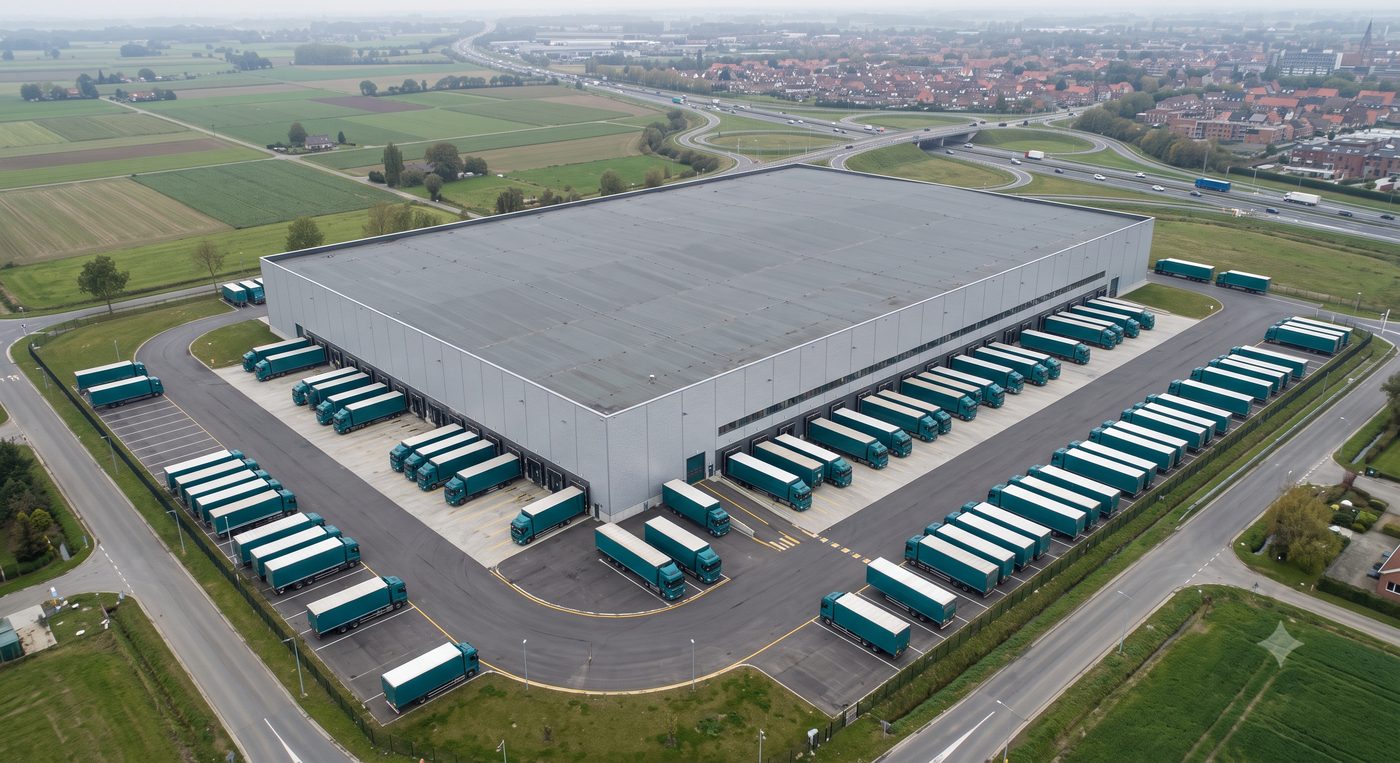
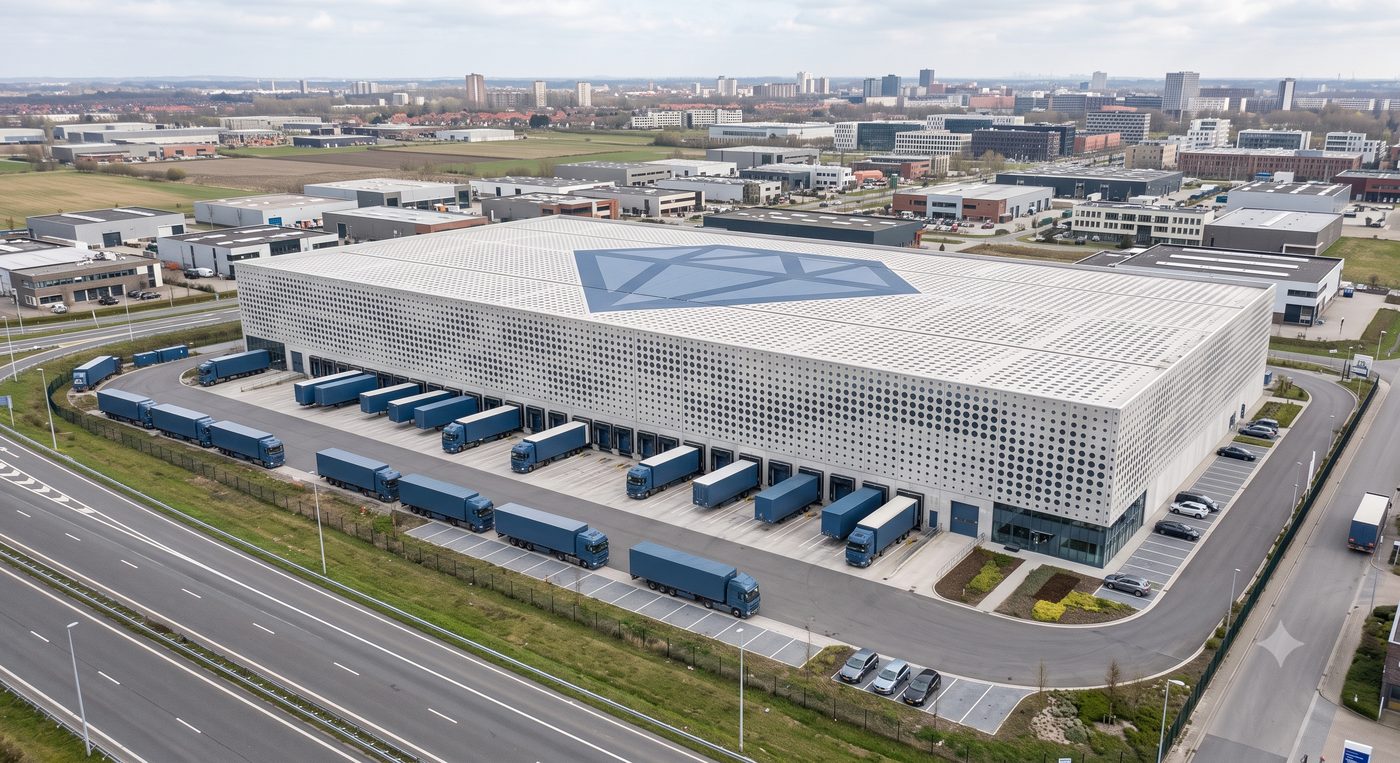
The building-scale test above extends to a survey of six German logistics facilities using publicly available aerial imagery. Visual examination — without classifier intervention — reveals three distinct ways brand and architecture fuse into a single visual layer, before any AI system touches the imagery.
| Type | Signal carrier | Facilities |
|---|---|---|
| A — Fleet-carried | A neutral envelope; brand signal carried entirely by trailers, trucks and branded loading equipment. | DHL Osterweddingen · PENNY Cologne |
| B — Envelope-carried | Colour and mark applied at architectural scale — readable from altitude without the fleet present. | KiK Bönen · IKEA Dortmund |
| C — Hybrid | Envelope and fleet carry the brand signal simultaneously, at every layer — the most complex case for any classifier. | EDEKA Oberhausen · DHL Münster-Nord |
In all three types, the fusion precedes the classifier — it exists in the built environment before any AI system touches the imagery. Left ungoverned, generative and classification AI systems inherit it without disclosure or verification. Full methodology, figures and the literature review are in the preprint.

Governance & Sovereignty
Responsible AI
by Design.
All evaluations conducted with personal subscriptions and private hardware. No proprietary or client data used. AI-KORP does not claim to make a practice "EU AI Act compliant" — that's a legal status only a qualified assessment can confer. Its ambition is more modest: keeping tool use aligned with the Act's literacy and disclosure logic as a matter of professional discipline.
This framework includes AI-assisted content used to demonstrate creative, strategic, and technical AI expertise, and this page itself was rebuilt with Claude (Anthropic) from the author's own archived pages, the Zenodo preprint, and the GitHub repository. All tools are vetted against the EU AI Act. Content is provided for informational purposes and should not be relied upon as legal, regulatory, or technical advice.